Feeds:
Posts
Comments

Last Saturday we had a wedding at the funeral home. Yep, you read that right. In fact that’s the 2nd wedding we’ve had in our chapel in recent years. My good friend Doug, who doesn’t currently belong to a church, and his new bride Debbie, needed a place for a smaller wedding with 50 guests and a sit down reception following.
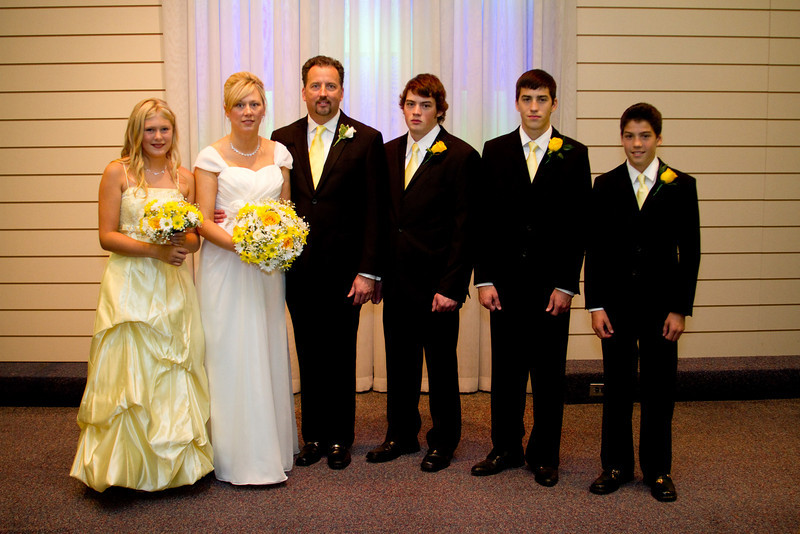
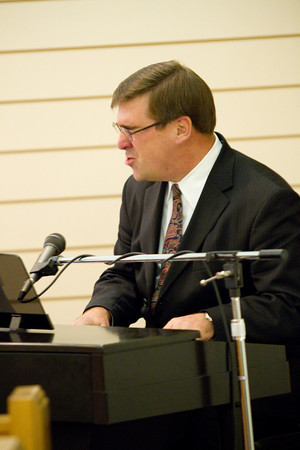
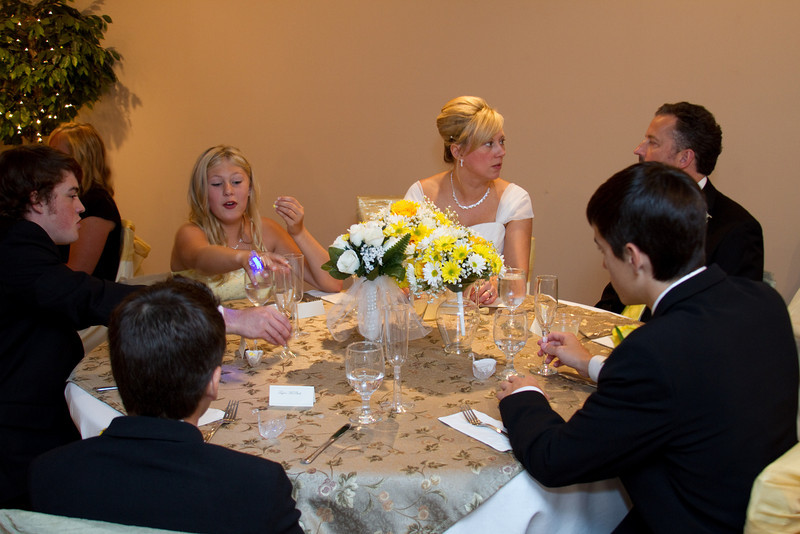
Our place fit the bill just great. We have a chapel with permanent pews and seating for 175 people. We have a pipe organ (my great grand father had it custom made in 1928). sound system, built in video cameras to tape the wedding for grandma that couldn’t make it, a piano, big narthex for gathering, and changing rooms for the bride and bridesmaids. Our family center for receptions seats 120 people. The caterers brought in fancy place settings and all the food. We set up plasma screens in the reception area to show the video we put together for them. Doug’s father is a minister and performed the ceremony and I added a Billy Joel tune from the piano in addition to the traditional wedding prelude and postlude from the organ played by our regular organist. It went off just great. The bride’s family were amazed at how well we handled everything and said that my wife, Jodi, and I ought to be wedding planners.
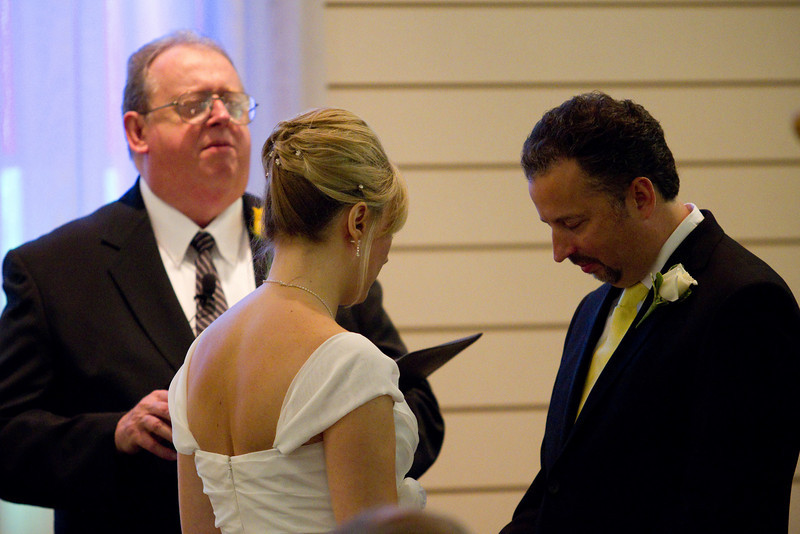
In a sense we already are wedding planners. Weddings aren’t a whole lot different from funerals. People gather, we play music, show videos, there is a processional and recessional. The minister talks. There is a reception following where people eat and tell stories. Some people cry, many smile and laugh, and there is lots of hugging. The main difference is that we plan funerals and have them in 3 days. Weddings can take months to plan. Which can also be a problem because the bride has “time to change her mind”. And Debbie did change her mind several times in the planning of this wedding. We just stayed calm and assured her we would make everything happen. And we did. Just like we do with funerals.

Our main branch is a large funeral home. And most of it sits empty much of the time. I would love to do more events here. Weddings, graduation open houses, retirement parties, or anniversary gatherings. But the challenge is getting the public to see that it would be OK to have those kinds of functions here too. It’s the “Spook Factor” that keeps them from thinking that way. The folks that have used us for weddings were personal friends and knew that we are regular fun loving people and our chapel isn’t any different than a church. I have often wondered if I opened a different facility and just called it the Life Story Event Center, if people would embrace the idea that we can help them with any kind of event that they wanted to have. And if we had more events going on and we could keep the building occupied more then we could charge very reasonable rates and everyone would be happier.
I’d love to hear from any of you out there. What do you think of this concept.

I’m Dale Clock. Thanks for listening.

Welfare Funerals

There’s a topic that I think needs to be brought up here on this blog. For lack of a better term I’m going to call it Welfare Funerals. I use the term welfare because it’s what public assistance was called back when I first got into the funeral business. Since then the government agency that handles that kind of stuff has changed names several times to Social Services to Family Independence Agency, to Department of Human Services. The name may have changed but it still serves the same purpose in regards to my business.

They provide financial assistance to families that have no assets for funeral expenses. The State of Michigan runs these agencies and sets the figures. The amount of dollars that they provide for families varies by the amount of assets the family has and what type of services they are planning on having. At the present time they provide $365 for a Direct Cremation, $600 if you have a memorial service and a direct cremation and $700 if you have a burial. And those amounts have decreased quite a bit  since I first started in the funeral business 30 years ago. Back then they would provide $1700 for a burial. As state budgets have grown tight, the amount has been lowered. While our costs, just like your living expenses, have increased with inflation.

We typically handle 15 or so welfare cases a year. We reduce our fees to help the folks in need. I know that most funeral homes do the same thing. I also look at this as my way to give back to the community. In dollar figures this amounts to nearly $50,000 a year in services that we provide at no charge. I know that hospitals, doctors and lawyers sometimes do the same kind of thing.

Unfortunately we have had an increase this year in the number of people needing assistance. I’m sure the economy has a lot to do with that. But what’s been terribly disturbing is the attitude some of these folks have when they come to see us. There is a huge sense of entitlement. Typically their deceased family member has been living on government assistance for years and has no assets to speak of. So family members think that the “government” is going to pay for everything. When we inform them that the figures listed above are all that they can get from the “government” and that we require the family to pay additional funds for us to take care of things they are shocked. “What???  We’ve got to pay?? We haven’t got any money either” Yet they seem to drive in nice cars, have cell phones, smoke cigarettes, and carry soda bottles in with them. (yes, I’m stereotyping a bit but this is a true description of what I have seen dozens of times) They obviously have money for those things. Yet they have no sense of responsibility for the final care of their loved one. They expect the funeral home just to do everything they want for free. And all we are trying to do is recover enough funds to cover the cost of what we are doing.

Here are two examples from the last few weeks. A man died with no local family, it was medical examiner case. We transferred the body from the place of death to our cooler. After a week the brother from out of town arrived. He stated that he wasn’t willing to contribute any funds beyond what DHS would provide. Plus he didn’t believe in cremation and refused to sign the authorization form. They had a small gathering on their own and then he left town, abandoning the body in our cooler. We had to file with the state and the medical examiner to get authorization to cremate finally after 3 weeks of paper shuffling and legal hassles.

In another situation a women who was on disability died. She was living with her brother and had 3 adult children and one child living at home. Her brother and mother came in to make arrangements. They wanted to have a memorial service at our place. I told them I needed $700.00 in addition to funds that we could get from DHS and that they would have to pay for newspaper obituaries too. That’s less than 1/3rd of what I normally charge for the services they wanted. But they refused to pay anything. The mother said her daughter was an adult and made her own choices and that she wasn’t responsible for how her daughter ended up. The brother said he was on unemployment and couldn’t pay anything. Nobody in the whole family was willing to provide a dime towards the cost of what they wanted me to provide. Yet they went to the newspaper themselves and ran a paid obituary and then had a service and reception on their own somewhere. I’m sure they paid the newspaper, the gas station and the grocery store full price for everything they got. But yet they expected me to do things for little or nothing. Why is that??

I really don’t mind helping people out. But at what point do you draw the line? At what point should a family step up and take some responsibility? Plus an additional challenge is that once I have possession of the body, I’m stuck with it. I can’t give it back to the family. I can’t take it back to the morgue. In Detroit this year there have been hundreds of bodies abandoned at the county morgue by their families because they are unwilling to pay a funeral home for services. The state needs to figure out an equitable way to handle this situation. I’m willing to do my part, but it is not my responsibility to pay money out of my pocket for the final disposition, when everyone else involved gets paid in full for their part of the process.

I’m Dale Clock. Thanks for listening.

It’s time I write a little bit about my life outside of funeral service. Yes, I do do other things than work. It’s been a great summer here in Michigan. The weather has been hot, Lake Michigan has been warm and we’ve had a bunch of company come and visit.

Jodi & Dale

My wife, Jodi, and I have a cottage in South Haven, Michigan about an hour south of our home base in Muskegon. This summer we’ve been able to spend more time there.

I’ve done a bunch of projects around the place. I built shelves in the shed, a new built-in linen cabinet upstairs, installed a new vinyl floor in the kitchen and constructed a homemade system of little cement dikes in the basement to hopefully channel the water that leaks through the walls into the floor drains. I had the professional waterproofer guys give me a bid to do the job but the $5000.00 price tag was a little too much this year. Not that they were asking too much.

South Haven Shelves

I really wanted to have them do it right, once and for all. But I’ve been listening to Dave Ramsey on the radio and his message about buying stuff on credit got to me. So I’ll save my nickels until I can pay cash for the job and hope that my band-aide job will do the trick for a few years.

Now some people may look at all of that as work, but I really enjoy building stuff.

We also helped a friend put on her wedding and I played piano for her while she sang at the rehearsal dinner. And I did some voice over work for a PowerPoint presentation for Jodi’s publisher. Here’s a photo of my professional recording setup.It’s a real MacGyver set up of wood, coat hanger and old screen. But it did the trick to keep the pop’s out of the recordings.

Home Made Windscreen

Jodi is writing a book called “Keep Your Money – a guide to helping your parents handle their assets during their golden years”. Jodi has been in the funeral pre-need business for 25 years now and is a real expert on the ins and outs of Medicaid, Nursing Homes, Insurance and end of life planning. The book is due out in January of 2011 (If she can finally buckle down and crank out the last 2 chapters).

And last Saturday was a real full day for me. I was the Master of Ceremonies and celebrant for a Life Story Memorial Service at the Funeral Home. Here’s a short video of the intro to that service to give you an idea of what we do at our place.

As soon as I finished that I got in the van and delivered a truck load of stuff to my daughter, Kellie, who was moving into her dorm room at Michigan State, in Lansing for her Junior year. She’ll be there for the first semester and then off to the Czech Republic in the spring for a semester of foreign study.

Dale and Kellie

Then I drove back to Muskegon for a reunion gig with “Out of Control” the band I used to play piano for 20 years ago. It was great to see the guys and play again. The bar was packed and it was a late night and I remembered why I don’t do that anymore. My body can’t take closing the bar at 2am like it could when I was in my 20’s. But it was a great time.

Now it’s moving into Fall and football season is upon us. I hope all of you had a good summer.

I’m Dale Clock. Thanks for listening.

I have noticed that funeral directors sometimes have a hard time seeing the difference between a product and a service. This is especially true when it comes to many of the “Other Services” (see previous post) that funeral homes are now providing. If you will, please indulge me in a little self promotion to make my point.

We are a Life Story Funeral Home. 5 years ago I joined a progressive group of Funeral Directors who had formed the Life Story Network. They had designed a system to gather the life story from a family and then produce a wonderful suite of products that include a written life story, memory folders containing pictures and the written story, Two video’s that tell the story (not just slide show) A website that allows people to read the story, see the video and share memories and photos with each other, Life Panel collage, custom, cards, register books and more. They can produce this material in 24 hours, send it back to us via the internet and then we burn the videos and print all the materials at our place. Plus Life Story Network trains your staff how to do all of this. It’s an amazing system. It has completely changed how I look at funeral service, how I do my job, and how I relate to the families. I will never go back to doing things the way I used to.

Here’s a link to the last 30 days of our calls. The bolded names are the families that chose to have us help them tell their Life Story. Click on a few and you’ll get an idea of what we do.

Clock Life Stories

I also belong to a number of funeral Groups that include funeral industry leaders from around the country. I attend several meetings a year with these folks. I try to make it to the big conventions too. And at all of them I talk about Life Story. I have given presentations on it and I have talked one on one with folks and shown them what we do. The typical response is polite acknowledgement that it’s a nice product. They usually say they do something just like it or just as good. They also say things like “isn’t that a lot of extra work”, “isn’t it expensive” “I haven’t got time for that”. And the big operators figure they can do the same thing in-house themselves. (I thought the same thing and tried for a few years before joining the Life Story Network)

The challenge is that these folks think what I am telling them about is a product.

Products are typically commodities that people can buy at multiple places. The same caskets can be bought at most any funeral home or even Walmart. You just make a phone call and it’s delivered to your door. Take your photos to a Big Box store and get a slide show on a DVD. Do you want pretty folders with butterflies on them? I can get them by the thousands. Folders with simple templates that allow you to drop in photos are better, but any funeral home can buy them and so can the public.

Life Story is a SERVICE. Life Story is not a product or a suite of products. It’s not something we buy at wholesale and sell at retail. It’s a SERVICE that we provide to the families that call us. It’s something we do for our families that sets us apart from everyone else. So if the true value of a funeral is 1. the Gathering of People and 2. the Telling of Stories, what better service to provide than helping the family tell the Life Story of their loved one to everyone that attends the gatherings at our funeral home.

It’s in the arrangement conference where the true “Life Story is a SERVICE” first comes into play. Think about this. I spend at least 2 hours gathering the great stories from the family; SERVICE. (Gathering the life story is the most rewarding thing that I have ever done in funeral service. It really connects me with the families.) I spend another hour typing, organizing and uploading those notes; SERVICE. The professional life story writer spends 2-3 hours writing a unique Life Story; SERVICE. I spend 90 minutes going through photos with the family, scanning them, uploading them; SERVICE. The life story graphic folks spend 2 hours cropping, tweaking, doing layout to make the Life Panel, Memory Folders, books and cards; SERVICE. The Life Story video folks spend 2 hours editing, panning and zooming, adding music to create two different videos that tell a story (not just a slide show); SERVICE. I spend another hour printing, folding, collating, cutting, sticking and burning to make all the products. Then I spend another 30 minutes setting up all the products; SERVICE. All of that stays online forever; SERVICE. Add it all up and there’s at least 12 man hours of service there. That’s twice as many man hours as it takes to prepare, dress, cosmetize and casket a body. Which service is more important? How much would you charge for each service? Which service can you provide when the family chooses cremation with no viewing?

In the end that family walks away with a few Life Story products (things you can see, touch and hold). Those Life Story products enhance their experience with us. Those Life Story products always make the gathering better. Those Life Story products will last for generations to come. A Life Story Memory Folder and a Life Story Video with a professionally written life story is always a completely unique product every time because every Life Story is one of a kind. It’s the SERVICE that we provide to make the product that is valuable to the family, not the piece of paper that it’s printed on or the DVD it’s burned on. The SERVICE behind the Life Story products is what sets us apart.

I know that the Life Story system is not for all funeral homes out there. And many folks are doing a fine job with the products they use and offer. But are there things that you are providing for families that are really services and you are selling them like products? Just because what you do doesn’t involve a body doesn’t mean it isn’t a valuable service.

I’m Dale Clock. Thanks for listening.

In my last post I talked a little bit about “Other Services”. These are the things that we do for people that are not tied to the body or the box (casket/vault). As time goes on I’m positive that these other services are going to be as important to the success of the funeral industry as the traditional services we now provide.

Some of these “other services” include Reception Planning, Reception Setup and Cleanup, Catering, Master of Ceremonies, Celebrant, Scanning photos, Retouching photos, Printing Photos, Graphic Design and Print product production. Life Story Information gathering, Life Story Writing, Video production, Video recording, Video Presentation, Video Broadcasting, Digital Music procurement, Music Playlist production, Display design for personal items and memorabilia, Aftercare/Grief Counseling, Transitional Care, Benefits processing, Insurance processing, Contributions processing, Website entry, Social media entry, Web site maintenance, Post funeral follow-up, Cremation product customization and more. Plus providing and maintaining all the equipment necessary to do all of those services.

That’s a pretty long list, huh??? I’m sure some of you could add some other items to the list.  These are the “other services” that many progressive funeral homes are providing now. 25 years ago I didn’t provide a single one of those services and now I do them all and I’m trying to make them my signature services. Yet none of these are taught in mortuary school or require a funeral directors license. In fact, people can get all of these services elsewhere or do it themselves. And there in lies the challenge. When you take away the “Spook Factor” (see previous post) people can put on an event without us. Our challenge is to show people that we are still the affordable right choice for hosting that special event.

So how do we do that? I’m not exactly quite sure yet. But here are some thoughts.

If the true value of a funeral is 1. The gathering of people and 2. The telling of stories, then those two things need to become the focus of what we do. They have to be the “Main Thing” and everything else has to compliment the Main Thing. Does your facility and its layout make it easy for people to gather and share stories? Is it open and inviting? Do you serve snacks and beverages? Or are the chairs arranged so it’s easy for you to set up the room in straight lines for tomorrow’s service?? And do you force people to stand in a receiving line instead of spreading the family out so guests can visit with the family members that they know or even just talk to each other. Remember it’s about telling stories.

Do you encourage other friends and family members to speak at the service? Do you spend an extra hour with the family gathering the stories of their loved ones life and then act as the Master of Ceremonies and share some of those stories with the guests. Or do you just get Pastor Bob to give sermon # 3. Do you get 50 photos from the family and drop them into the standard slide show program with the nature scenes and the heavenly flight intro?  Or do you take the time to put captions on the photos so the slide show tells a story and is more than just pictures of people the guests may not know.

I could go on with dozens of more examples but I think you get the gist if it all. Think about everything that you do and see how it relates to the 2 Main Things. My theory is that if we can show the public that we can help them, better than anyone, put on the kind of gathering they want and make it easy for them to tell their stories and for them to hear other people’s stories, then our businesses will continue to thrive. If we don’t then people will continue to use us only for the disposition of the body and look elsewhere for someone to help put on the party they want.

I’m Dale Clock. Thanks for listeneing.